Wednesday, March 26 · La Lata Peinada · 7 PM

A cinematographic experiment around the capitalist science fiction of Michel Nieva

The starting point is a book and a question that the book formulates: what happens when capitalism no longer needs to promise us the future, but rather sell it to us as science fiction? Capitalist Science Fiction (Anagrama, 2024), an essay by Argentine writer and philosopher Michel Nieva, dismantles the technological narrative of Bezos, Musk, and Zuckerberg as an aesthetic of flight. A humanity without a world taking selfies from the cosmos while the Earth burns.
Nieva has spent years exploring that cross-section between literary speculation, political criticism, and the culture of the strange, with a voice that transitions between philosophical essay and fiction of science and trash. In his universe—and especially sharply in this essay—Mars is not the destination of the species, but the horizon of capital. And worms, those creatures that work the earth from below and transform it without being seen, function as an inverted and parasitic figure of the posthuman subject: organisms that digest the system from within.

CriptoLombriz is an experiment surrounding that work. The project is co-directed by Jorge Caballero and Camilo Restrepo, two filmmakers who share a sustained interest in the limits of archives, synthetic images, and the latent violence in visual documents. Caballero is a creator and researcher, co-founder of Artefacto and GusanoFilms, and associate professor at different universities, where he works at the intersection between technology, cinema, and social transformation. Restrepo is a Colombian film director and audiovisual artist, with a filmography that crosses documentary, experimental cinema, and performance to explore memory, violence, and identity.

The direct antecedent of CriptoLombriz is the short film 09/05/1982 (Spain, 2025), an experimental cinema experiment also co-directed by Caballero and Restrepo. The film proposes a deteriorated film shot in 1982 in an unspecified Latin American country—a succession of everyday images among which records of the violent events of that day emerge. A man’s voice presents the official version. Under that apparent banality, the film raises the suspicion that something was covered up. All the images explore the increasingly blurred limits between the photographic archive and the synthetic image.

CriptoLombriz starts from Nieva’s proposal to build a fiction that inhabits the Martian and worm-filled universe of the essay—that capitalism that mutates, buries itself, and reappears with another name. Nieva’s universe offers a grammar—that of the parasite, the crypto-organism, the species that survives because no one sees it—that serves as a narrative and visual structure for a feature film working with manipulated archives and the question of what kind of future we are manufacturing when we let machines imagine for us. CriptoLombriz is simultaneously a cinematographic production project and a research surface, an attempt to bring Nieva’s criticism to the territory where capitalism has already colonized the image as well.
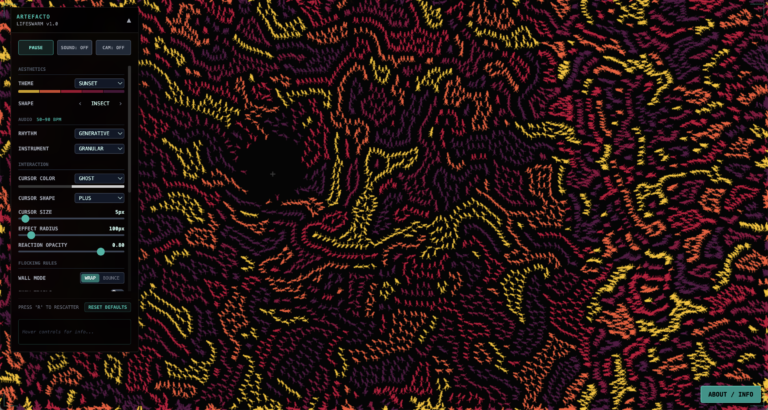
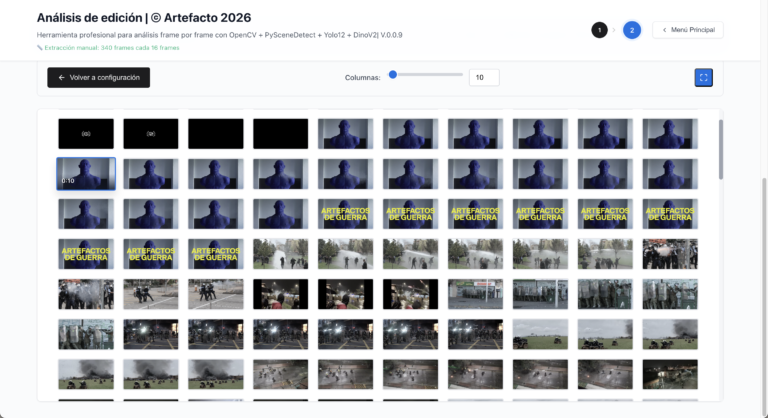
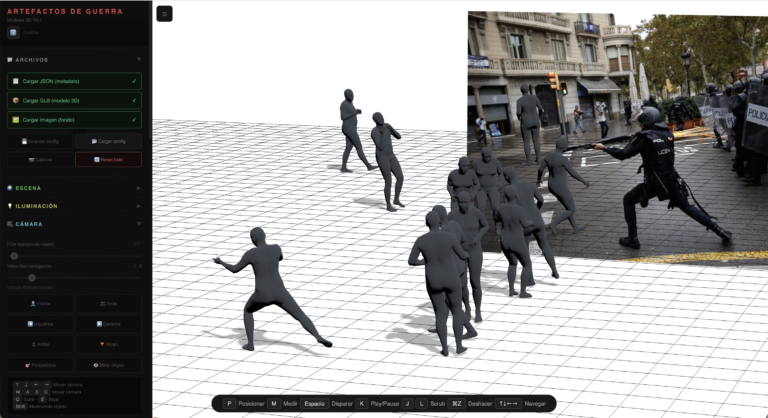
Application: https://criptolombriz-post-capitalist-parasite-syntax-231178493219.us-west1.run.app/